An Understandable Wind Park
24 November 2026At the TUHH Institute of Embedded Systems, Franziska-Sophie Göttsch, Mohammad Alkhiyami, Leandro Lanzieri and Görschwin Fey are building a model wind park together with a group of students. The park should coordinate itself and be able to explain what it does.
Smart grids and transport networks are made of embedded devices that sense their surroundings, act on them and coordinate over a network. When such a system behaves unexpectedly, the people who operate and use it need to understand why. A wind park is a compact example, in which each turbine has its own controller, the turbines affect each other through their wakes, and a park controller coordinates them over a wireless network to feed the grid.
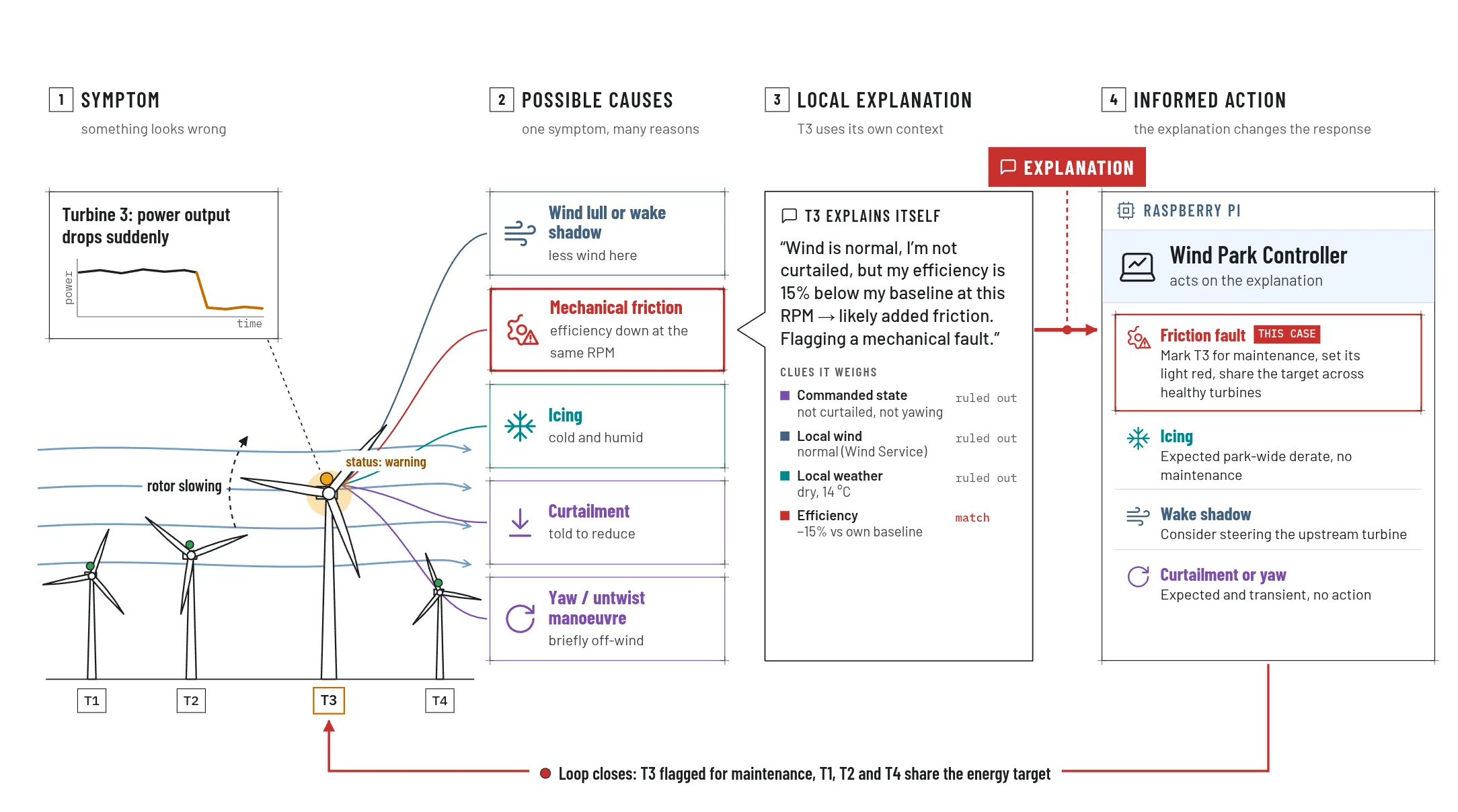
Every model turbine has an embedded node running RIOT, which drives the rotor and turns the nacelle into the wind. A simulated wind field simulation runs alongside the hardware, and a central controller coordinates the turbines over the network.
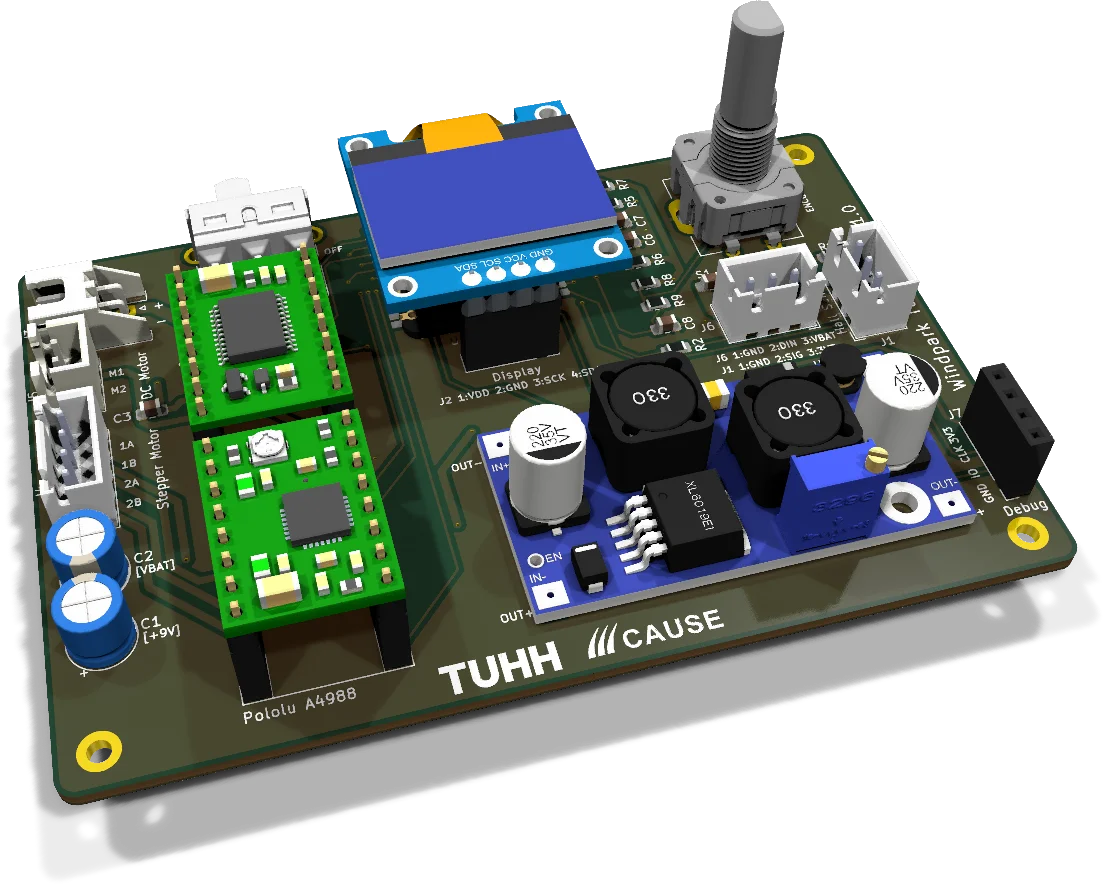
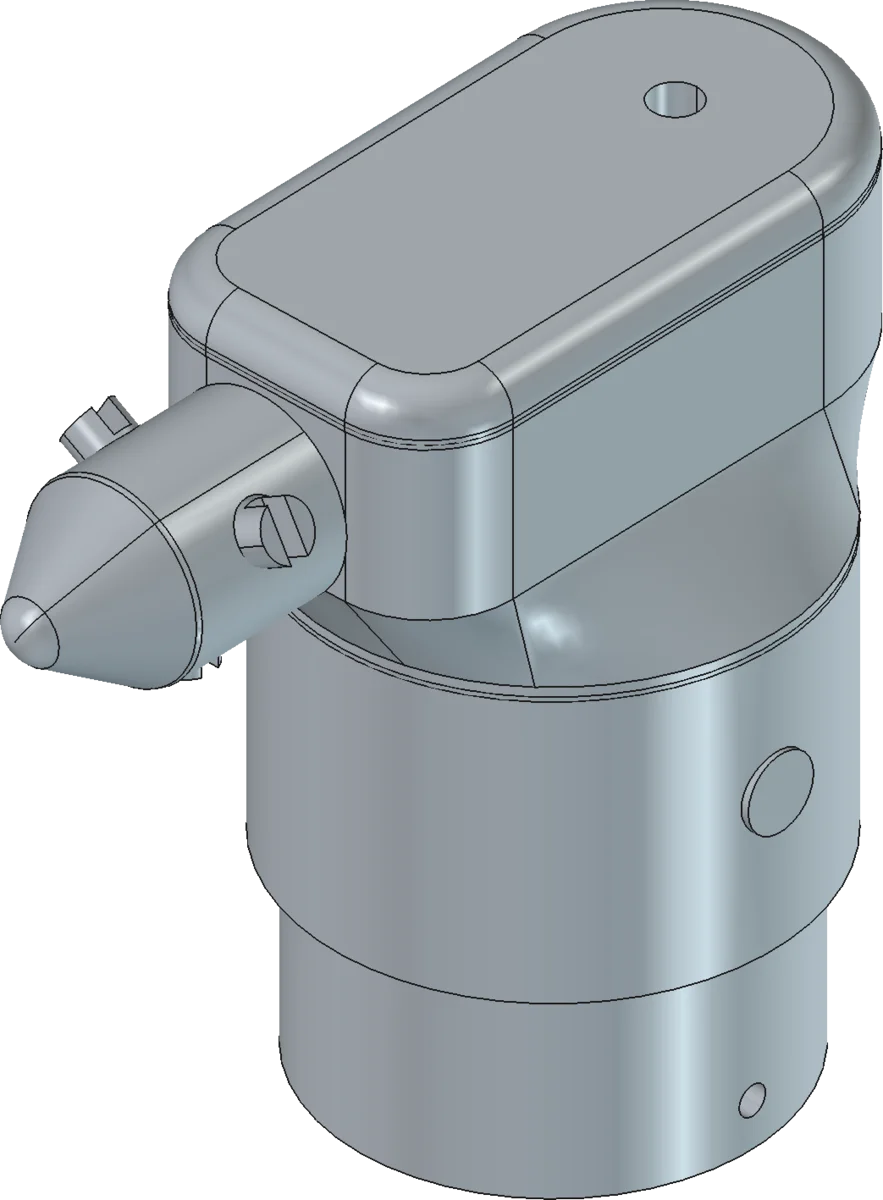
With the park we want to study how turbines should be configured, how the park as a whole should behave, and whether the system can explain its behaviour using IoT protocols. We will keep reporting on the progress and results!
Further reading
- Görschwin Fey, Martin Fränzle, Rolf Drechsler. Self-Explanation in Systems of Systems. RE4ES, 2022. doi:10.1109/REW56159.2022.00023
- Emmanuel Baccelli et al. RIOT: An Open Source Operating System for Low-End Embedded Devices in the IoT. IEEE Internet of Things Journal 5(6), 2018. doi:10.1109/JIOT.2018.2815038